sponsor this site
deards hardware shop

local low cost marcia road advertisinglocal low cost marcia road advertisinglocal low cost marcia road advertising

History Print E-mail

Private houses

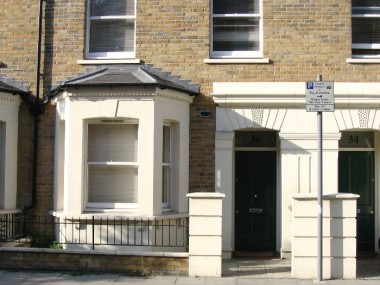
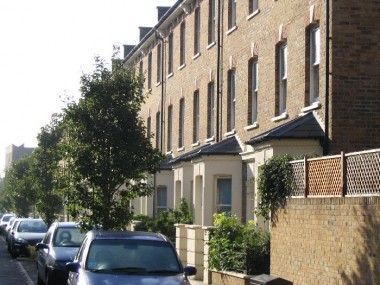
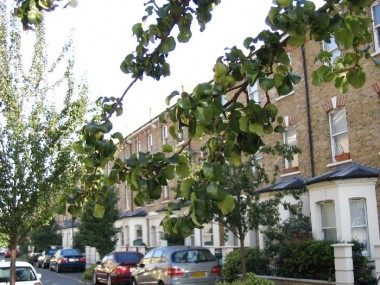
If you live in one of the houses 3 to 87 Marcia Road (and the 4 similar houses on Penry St), you may like to know that they have a 130+ years' history before 1999 when the developers Galliard started to build them.

Click to enlarge

Briefly, the houses are built on the ‘footprint’ of houses that comprised a street built in the 1880s. The modern houses preserve the proportions and window details of the originals with the exception of the lack of chimneys and the place to store the rubbish bins. The long wall running down the north side of the Marcia Road gardens once separated it from large railway goods yards, but more of that history later!

Identical but original houses can be seen in Darwin Street, near the Old Kent Road flyover.

The reason for the complete renovation was that by the 1990s, the condition of the houses and the reputation of Marcia Rd was so bad that it was bought up by the council and offered to developers. Before the work on those houses started, part had already been demolished and made available as ‘social housing’ - the low-rental cost flats in the area between Penry St and numbers 2-6 Marcia Rd.

Click to enlarge

The original intention was to renovate the houses but they were in such a poor state that it was agreed that the best thing would be to demolish them all and build new, but preserving the old look. That is why the street is new but looks Victorian. (Actually, it is the second time houses covering the area were completely demolished - the first was to create the original Marcia Road.)

This enabled Galliard, the chosen developer, to incorporate some of the advantages of modern building such as high insulation levels and energy-efficient heating and lighting systems.

Why 'Marcia'? I suspect, but have not been able to confirm, that it was named after a member of the local land owning family, Rolls. (More of the Rolls family later, and yes, there is a connection to Rolls-Royce cars.) Rolls Road still exists the other side of Tesco and there are covenants going back to the Rolls estate in the Marcia Road houses' title deeds.

NEW (April 2010): A page on one family's life at 58 Marcia Road between 1910 and 1917 including a not-to-be-missed account of a death by bombing during the First World War. Marcia Road: Sanger Family History. (Opens in new window.)

Old and new photos of Marcia RoadI have found two photos of the old Marcia Road on the internet, links below. If you know of any others, or are an ex-resident and have any memories of it that you would like to make public, This e-mail address is being protected from spambots. You need JavaScript enabled to view it .

3 Marcia Road, late 1970s(?) On the Lyons family website. (Scroll down)

Rose Brown, a 15 year-old milkwoman, taken on 8 February 1941, with her handcart at the Marcia Road junction with Dunton Road, where Ash's dairy stood (demolished in second picture, below). According to a Marcia Road website reader who knew Rose, she lived in an alley that ran alongside Greyhound Bridge in Dunton Road. At the time of the photo World War II was into its second year - the British Army had just captured Tobruk - and presumably there was a shortage of men for jobs such as milk delivery. TopFoto Gallery.

Pre-demolition pictures

The following photos were kindly sent by ex-resident of Marcia Road, Sue G, who said "I'm glad I lived there. 95% of the street had nothing, but we were happy."
  1. Man in the road - was taken in the 70s and shows houses in Dunton Road where Tesco car park now is.
  2. From the 80s, shows those houses demolished, with a view to the flats the other side of Tesco, etc. Note too the wooden fences added by the council to improve the look of the street.
  3. Girl on car - was in 1986, and you can now see a wall over her shoulder.
  4. No 50, one of the last houses to be vacated. Note the curtains on the top floor.
  5. Taken in 1998, just before demolition.

sueg1
sueg1
sueg2
sueg3
sueg4
sueg5

Google Streetview of Marcia Road

From March 2009 we have Google Streetview. You can navigate up and down the road, with a 360 degree view. Locate Marcia Road using Google maps and click on the StreetView link.

October 2009: I have been contacted by someone with family members who lived in pre-redevelopment Marcia Road. If you can help with any memories of his family, please This e-mail address is being protected from spambots. You need JavaScript enabled to view it and I will pass on your details. He says:

"My Nan (Edith - "Eadie" - Sturgess) was born and grew up in Marcia road although I'm not sure which number. Her eldest sister Maude remained living in the family house until she passed away in the early 90s. My Nan has also sadly passed away as have all the other siblings but they all had fond memories of Marcia Road. I do believe that when my great aunt Ivy died a few years ago some of the residents of Marcia road sent flowers to the service. Would be nice to hear from anyone who remembers the family."

History of the area

Roman times

In Roman times the River Thames was crossed by a wooden bridge 60 metres east of where London Bridge now stands. (More information here.) The Roman road, Stane Street, leading directly to that place came up from the south from the direction of Chichester via what is now the Elephant and Castle and Borough - a route followed by the A3 road today.

Old Kent Road and Tabard Street - which runs from the flyover to Borough alongside Great Dover Street - were originally one road (just called Kent Road) and follow another Roman road, Watling Street. This came from Dover via Canterbury - the route of the present A2. Another Roman road, from Lewes, in East Sussex, joined Watling Street at the Asylum Road junction with Olk Kent Road (by Toys'R'Us). Watling Street joined Stane Street at Borough.

Although this area was all countryside at the time it was, of course, a very important route between Londinium and Rome, and McDonalds (on the Cantium Retail Park between Asda and B&Q) is on the site of a Roman villa.

Middle Ages

The main local features of the area in the Middle Ages were:

  • Bermondsey Abbey (which, at one time was a powerhouse equal to Westminster but which no longer exists, having been pulled down to build a mansion in the reign of Henry VIII) and
  • the pilgrim route to Canterbury after the murder in Canterbury Cathedral of Thomas Becket on 29 December 1170.

The pilgrim route, imortalised in the late 1300s by Chaucer in the Canterbury Tales, was one of the major pilgrim routes in England. You can still see the occasional pilgrim following in their footsteps down the Old Kent Road.

Between Shorncliffe Road and Albany Road, opposite Tesco, was a hostelry where the mediaeval travellers would stop and water their horses. It was called St Thomas a Watering, later to become the Thomas a Becket pub and was a place of public hangings. According to 'The Old Kent Road, Old and New London: Volume 6' by Edward Walford published in 1878, which contains a lot more information about this area, the last people hanged there were a father and son, for murder, in 1740.

The Thomas a Becket pub site, Old Kent Road 2008

There is an ancient tradition of hanging criminals at crossroads outside the town or city so that their spirits would be confused as to which way to go back.

Canterbury TalesThe reference to the Tabard Inn in Southwark (near London Bridge) comes early in the prologue to Chaucer's Canterbury Tales.

You can enjoy listening to it read in its orginal Late Middle English, with notes, on the Luminarium site

Old Kent Road Pubs

In the 19th century and early 20th century the Old Kent Road, with its market (which moved to East Street when tram lines were put down the OKR) was a famous drinking place. 15 pubs are shown in the half mile of Old Kent Road shown on the 1894 Ordinance Survey map of the area (reproduced by Godfrey Maps: London Sheet 90, ISBN 0-85054-033-X, purchase online or in East Street Library). A few survive as pubs, some have been put to other uses, and some demolished.

The Trafalgar, still a pub, a little further out on Old Kent Road.

The Green Man, now converted to Yummies and another restaurant, has a history going back to the 18th century when a turnpike (toll booth) crossed the road between it and the Dun Cow.

Site of the Green Man pub, Old Kent Road 2008

The Dun Cow's present 30s (50s?) building is now a doctors' sugery. ('Dun' means 'brown'.)

Site of the Dun Cow pub, Old Kent Road December 2008

The Gin Place was on the corner of Marcia Road and Old Kent Road where Marcia Court now stands. The only photo I have is of the site during demolision in 2002. The white wall in the centre is part of the front wall, and the red-painted alcoves, top right, part of the upper interior. The two burnt-out cars are where the houses 3A-C now stand, and in the background is the building now converted into the Eurotraveller Hotel.

The site of the Gin Palace, Old Kent Road September 2002

The World Turned Upside Down, towards the Old Kent Road flyover, was once the 'home' pub of London's Pearly Kings and Queens. Read this fascinating article in Southwark Life. (Largish PDF file) It is also mentioned in Edward Walford's history (see above) as already being over 200 years old when the book was published in 1878. In it he reports the name as originating either from the discovery of Australia, Van Diemen's Land, or Terra del Fuego or from the practice of inn sign makers to depict "things the opposite of what is natural and usual".

The World Turned Upside Down, Old Kent Road December 2008

The Bricklayer's Arms, now demolished, is only remembered in the name of the bus stop near the flyover. The huge railway terminus (now the Mandela Way business park) was named after the pub.


Eighteenth and nineteenth century

[to be completed]

Burgess Park / canals / Ice house / Deaf and Dumb school/ trams/ etc.
http://www.londoncanals.co.uk/grsurrey/burgess.html

Twentieth century

[to be completed]

According to the website www.discoverbermondsey.org.uk "Above the [Thomas a Becket] pub was a boxing gymnasium where amongst others, Henry Cooper used to train. On the top floor was a single room where David Bowie in his Ziggy Stardust guise used to rehearse with his band, Spiders from Mars."

Henry Cooper blue plaque, Thomas a Becket pub

Marcia Road on MySpace

A group living in Marcia Road (2007/08?) posted songs at Marcia Road on MySpace.

Back to top

 
RocketTheme Joomla Templates
Marciaroad.com for information for tenants, landords and owners
Sitemap | WebEffectiveWeb: Website design and consultancy